Giordano Bruno – A Martyr’s Revenge

Written July, 2026
Looking back at the insanity of it now, trying to imagine tens of thousands of corpses strewn across the fields of Europe from the various religious wars, to the auto de fe’s that warmed the hearts of the religious fanatics, to the sadistic tortures that forced the innocent to confess to imaginary crimes, to tongues being cutout, faces branded, limbs ripped out of their sockets, to even the severed heads of heretics displayed for public amusement……. it’s all impossible for us today to produce a coherent response to the “how and why” of it all.
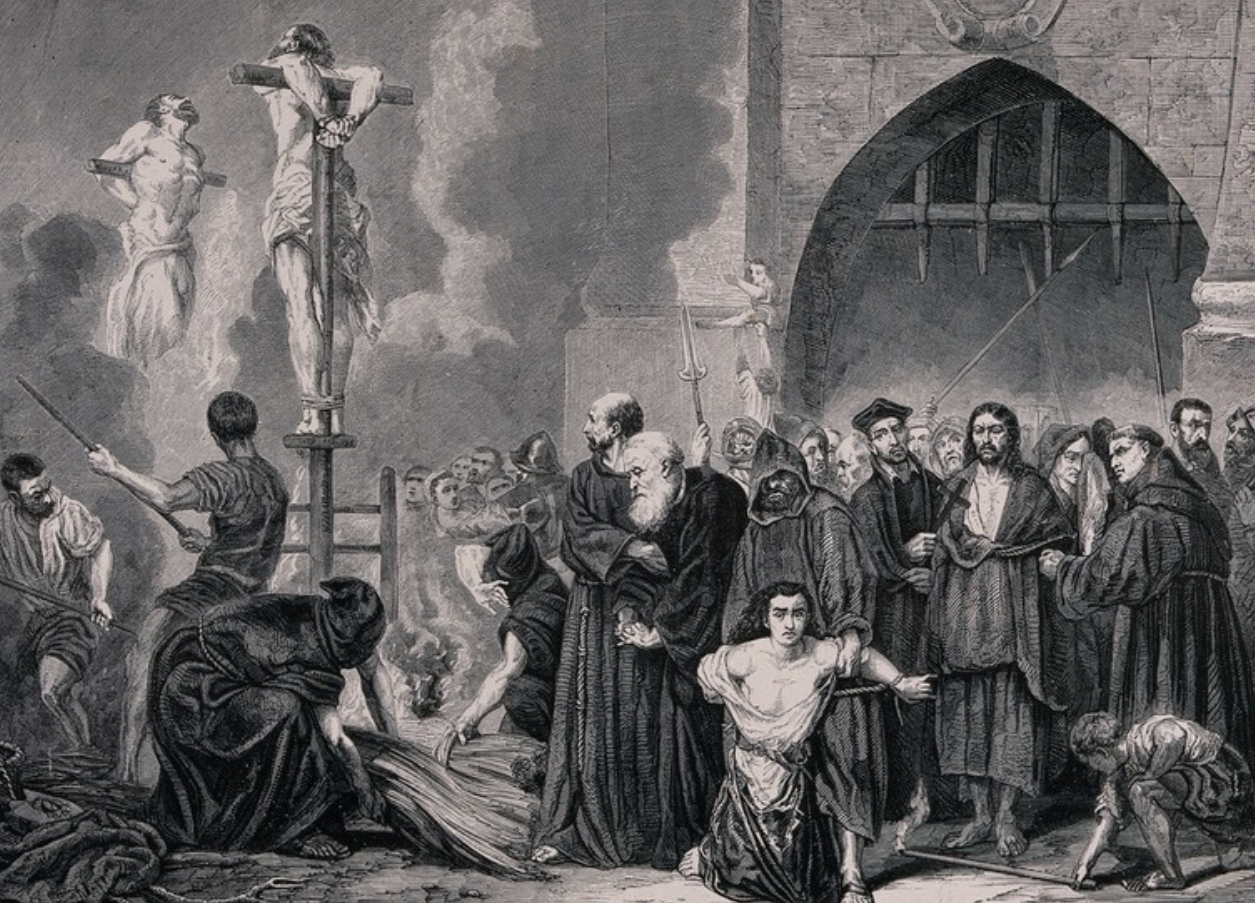
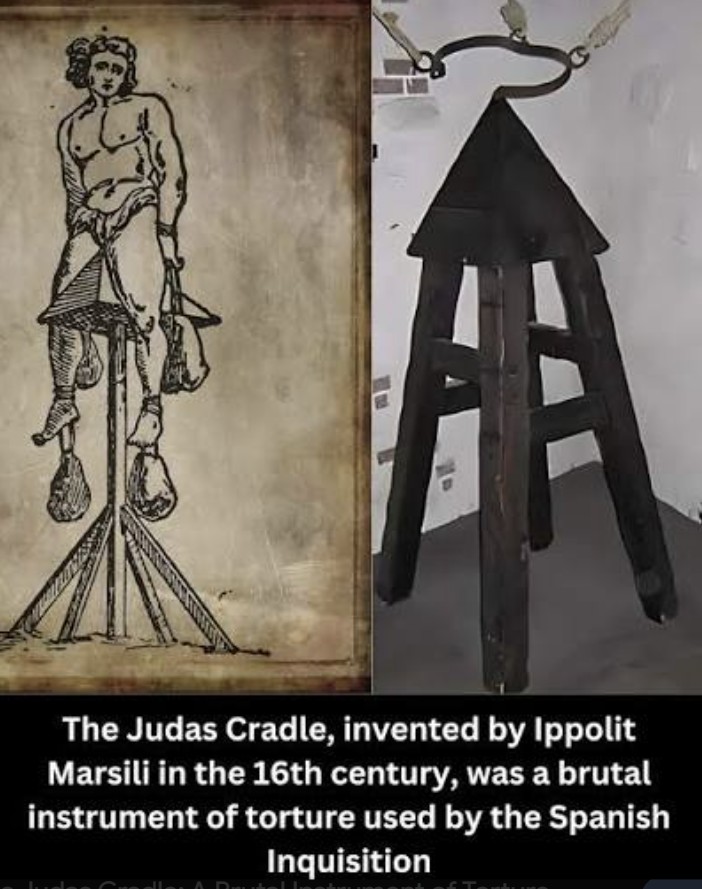
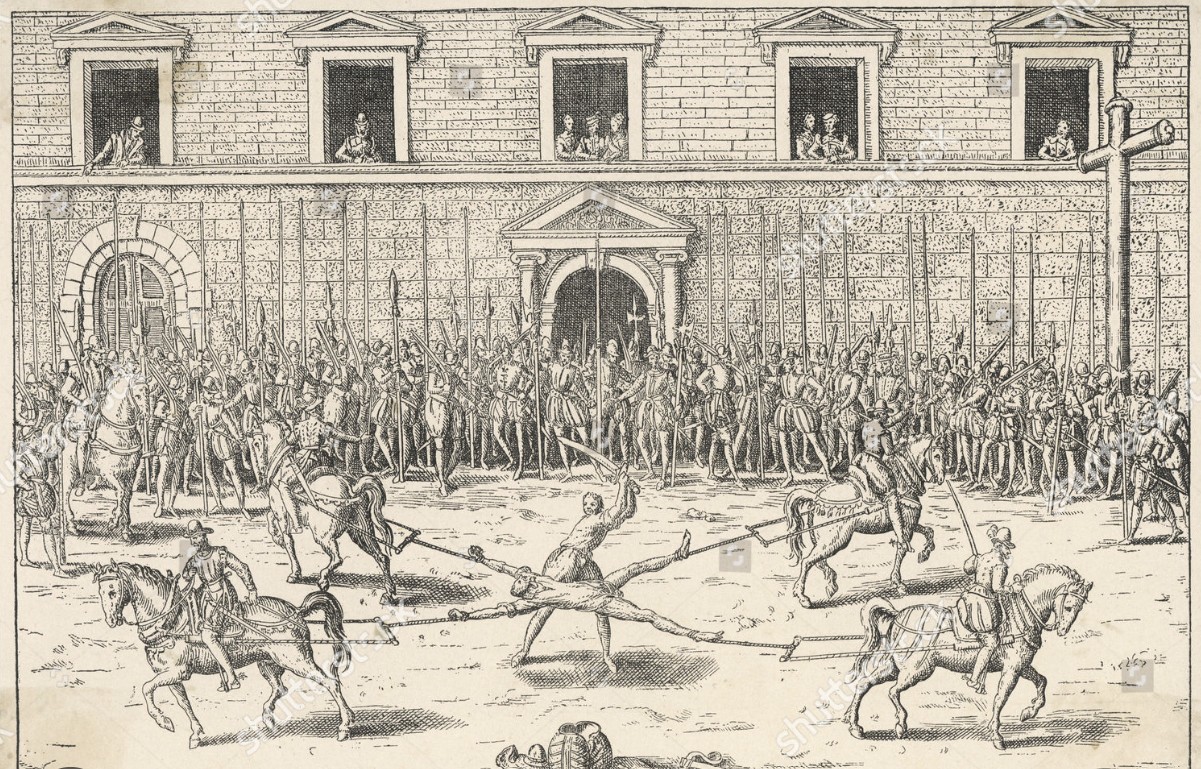
The casual, everyday acceptance to that level of brutality simply doesn’t register. To a modern perspective, those living in Medieval times must have been mad, holding views about God, faith, and tolerance that would now be seen as fanatical to the point of absurdity, and to such an extent that there was no degree of cruelty off limits to the Medieval mind when it involved punishing freethinkers, those individuals who could not avoid thinking outside the lines of orthodoxy. The “church” had established “THE” truth to every important question the faithful could imagine, and anyone who valued their lives were forced to accept it. Renee Descartes, the brilliant French mathematician once explained how curious minded people like himself remained safe from the flames, poignantly stated “those who lived well, were those who hid well.”
Of course, nothing from their world touches us much today as religious sentiment has chilled considerably since that raging inferno. In fact, religious fervor now has all the veracity of taking one’s daily vitamins, it’s just something to stay spiritually engaged, like a weekly gym visit. But make no mistake, throughout large areas of Europe, from the creation of the Inquisition in 1184 by Pope Lucius III, to the mid-1700s, expressing ideas contrary to church doctrine, or even an accusation of doing so was an invitation to torture and death.
Yet, even while the Inquisition tortured heretics at the slightest provocation, radical ideas (for their time) still found their way into the open air, as independent thinkers and philosophers made judicious use of Gutenberg’s printing press to propagate their ideas clandestinely, as books became weapons in this war for the mind. They attacked using weapons of logic and reason and dared the church to honestly respond in kind. They took aim at the ridiculous dogmas, such as the Incarnation, where God took human form for our convenience, which is pagan all the way down, or the Trinity where three separate theological concepts somehow occupy that same spiritual space, or the Immaculate Conception where even mother Mary was born of a virgin, or the ultimate absurdity, the miracle of bread and wine being literally converted into the flesh and blood of Jesus at communion. Each of those dogmas had been imagined by a church theologian, then promoted and voted on by a committee of men before becoming established as unquestionable facts about God that could not be questioned. Their hubris knew no bounds.
Which brings us to Giordano Bruno (1548-1600), a young 16th century Dominican Friar, educated deep in the heart of the Catholic faith. Even as a teenager it became clear to his parish Priests that he possessed a highly intelligent, lucid mind, and they clearly envisioned great things coming from him for the betterment of their faith, but though his intelligence stood out to all those around him, it was all of those around him who had been domesticated, corralled into sanctified beliefs of doctrine, which the young Bruno was expected to adopt. This posed quite a problem for the free-spirited Bruno, for he didn’t possess a mind amenable to control. This became apparent when he began asking his parish priests disconcerting questions about contradictions he found in holy writ, some even flirting with outright heresy.
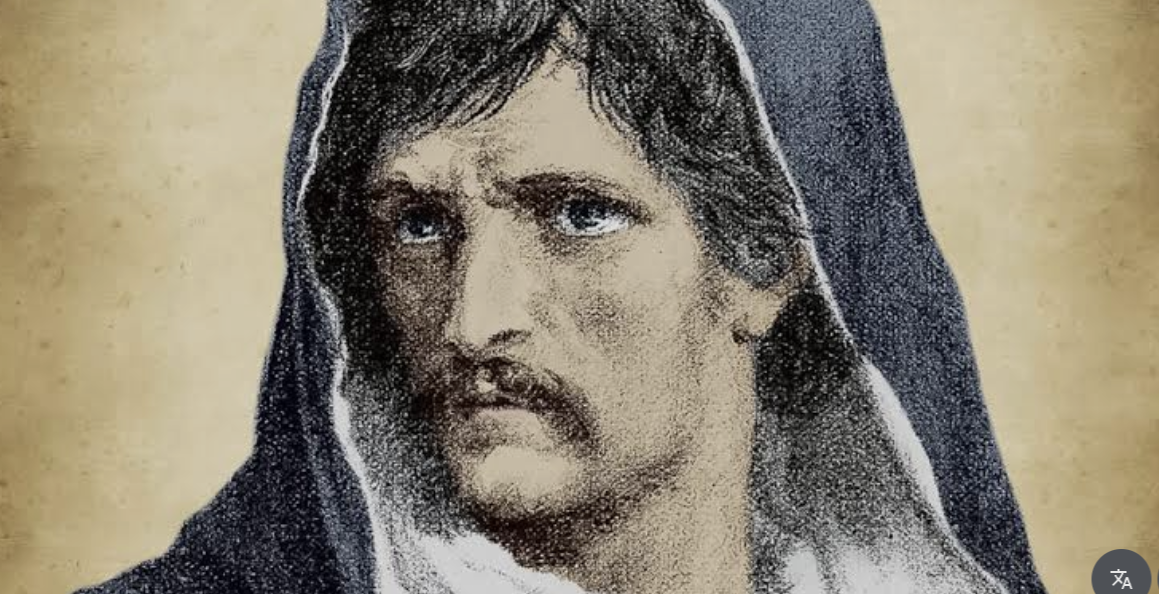
He apparently realized that his ideas posed a real threat to life and limb, as whispers of blasphemy began to circulate, so he left the priesthood, choosing instead to live a life of intellectual freedom as he wandering across Europe teaching and writing on all the radical ideas ricocheting across his mind.
Bruno’s character and curiosity made him the ideal man for his time, being born at the tail end of the Renaissance when Europe found itself reaching back to its pagan past for fresh ideas, initiating a golden age of intellectual curiosity, a Zeitgeist that pulled the science and philosophy from ancient Greece and Rome out the dustbin that Christian orthodoxy had thrown them. For the first time in over a millennium, creative thinking became social currency, and Bruno soaked it up. New ideas were springing up all across Europe and he quickly established a reputation as an intellectual maverick, and fearless thinker. He developed clever thought experiments that imagined new ways to considering old ideas, which Galileo, Newton, Huygens, and Leibniz would all take advantage of. Even Bruno’s religious writings had influence as they would go on to inspired Spinoza’s Pantheism. As one could imagine, his views very often put him in the cross-hairs of the church, so his life was spent avoiding countries where the Inquisition held influence, such as his home country of Italy.
Today, if we casually read of the ideas that would eventually cost him his life, they are all laughably absurd to us now. For example, he argued that the universe was infinite and therefore had no center, and that the stars in the sky were distant suns, and very likely had planets orbiting them as ours does and possibly had life and civilizations of their own. He clearly adopted Copernicus’ conclusion that the Earth was not the center of the universe, and therefore not the center of God’s attention, and he was not bashful to expound on those ideas. All of this was blasphemous to the Medieval church, of course, which quickly placed him squarely on the Inquisition’s radar. Their only problem was how to capture him.
Enter Giovanni Mocenigo.
Giovanni was a nobleman who invited Bruno to Venice to tutor him the art of memory, which Bruno was a leading expert at the time. Bruno hesitated, but Giovanni continually flattered Bruno and expressed the hope to learn all he could from this intellectual trailblazer. Bruno’s friends pleaded with him not to go due to the Inquisitions presence and Mocenigo’s unknown motivations, but Bruno considered Venice as one of the more liberal cites in Europe and was known to keep the Inquisitors at arm’s length, but it was a risky gamble, just the same. Little did Bruno know that Giovanni worked with the Inquisitors and all his fawning enticements to become Bruno’s devoted student was simply a ruse to extract the proof of his heretical ideas. Giovanni even admitted to this at Bruno’s trial.
Although his ideas harmed no one, and he broke no secular law, the Office of the Inquisition arrested him on charges of “blasphemy, immoral conduct, and heresy in matters of dogmatic theology”, and imprisoned him in solitary confinement for eight years in a small cell with very little light. Yet even after years of solidary confinement and torture, he obstinately refused to recant his views on whatever he thought and believed, so he was sentenced to death by fire. When the verdict of guilt was finally announced and his execution ordered, a defiant Bruno famously stated;
“Perhaps you pronounce this sentence against me with greater fear than I receive it.”
On February 17th, 1600, he was turned over to the executioners who stripping him naked, hung him upside down and burned him alive, with the blessing of the Pope; making Bruno the first modern man to be martyred for our right to think freely.
To illustrate just how committed the Vatican had become to silencing curious minds, thirty years after Bruno’s burning, the Inquisition arrested Galileo, the world’s preeminent scientist, a man hailed around the world as one of the greatest minds of the century. His arrest and trial had been prompted in 1632 when he published “Dialogs”, a book presenting a conversation between two interlocutors with one putting forth strong proof for Copernicus’ heliocentric (sun centered) model, a position strictly against church doctrine. In other words, the church could not risk the fallout to admitting to have been in error.
The format of the “dialogue” provided something of a ruse for writers, where they could express their opinions under the guise of a fictional conversation, and was clearly Galileo’s intention. The man desperately wanted his proof of Heliocentrism to be known before he died and attempted a bit of slight-of-hand with “Dialogs”, but the church wasn’t having it and jailed him. Even with his iconic stature and old age (67), the church still threatened him with Bruno’s fate if he failed to fully comply. He dodged their accusations of heresy as long as possible, but eventually the thought of burning like Bruno broke him and he fully recanted all that he had proven to save himself.
This war with Christian orthodoxy for the ownership of our minds claimed others, of course, but Bruno was the first that truly mattered, not due to his ideas per sei, but rather to the hard line the church drew against him or anyone else who dared to deviate from their sacred dogmas. Due to his intelligence, articulation, and being openly opinionated, the Church clearly felt they had a type of virus on their hands that could easily infect others. An additional factor weighing on the Pope’s decision was hearing growing rumors of his weakness on heresy, with complaints of his lack of leadership on the matter, so Bruno’s case presented him with something of a gift, an easy solution to his dilemma; an example would be made of Bruno that would silence his critics and strengthen his authority in one swoop. The math was that simple.
As suggested at the outset, the “how and why” of that kind of systemic intolerance is difficult for a modern intellect to penetrate, let alone explain with any coherence, but if I were to pin a cause to it, I would suggest that it was all perfectly predictable, given the nature of our brains. As a species we are incredibly susceptible to narrative and storytelling, whether it arrives packaged as some epic myth that helps support entire cultures, or perhaps a folk tale told around a campfire, or the childhood stories aimed to inspire us to behave, or even the stories we tell ourselves….about ourselves in the mirror. From cradle to grave, the stories we digest along the way sculpt for us a coherent framing that our pattern-seeking brains can identify and understand. They leverage our emotional lives by playing into our hopes and fears, for this life and the next. In cognitive terms, stories provide us with a type of operations manual for how we should interpret, behave, and respond to the various people and situations we encounter.
Now let’s pause for a moment and linger on that last sentence, because stories can certainly inflame our imaginations and shape our views about life in profound ways, but what happens when the stories in question are deranged or contain flawed ideas, as they often do? Well, given that we are not entirely rational creatures, history provides us countless examples that when stories become ridiculous, absurdity is not far behind. For a quick example, take the Attis cult from ancient Greece, which should make every man squirm. As the myth goes, Attis was a mortal who was punished with madness by the God Cybele for rejecting her advances, which led him to cut off his own testicles, then died shortly thereafter. Unsurprisingly, as these things go, Cybele had a change of heart and convinced Zeus to resurrect Attis. And from this bizarre myth, the Attis priests ‘believed’, with evident sublime conviction, that if they castrated themselves, which they often did during public festivals, they would secure their own resurrections.
Or for a modern example, consider the Heaven’s Gate cult that made headlines in 1997 due to the mass suicide of 39 of its members. Their guru, Marshall Applewhite, had a story to tell and convinced his followers that a comet streaking across the night sky at the time (Hale-Bobb), had an alien spaceship trailing behind it and that they (he and his followers) needed to rid themselves of their bodies so their souls could catch a ride as it passed by earth.
Or for a far less harmless, even comical version of this type of absurd submission to a storyline, I recently read a book about the famous theoretical physicist, Richard Feynman where he recalled walking up to an elevator where he saw several young orthodox Jewish men waiting to take it down to the main floor. When Feynman asked why they were waiting, he was told that they could not push the elevator button because it would cause a spark of electricity, and since it was their Sabbath, they were strictly forbidden to create a “fire,” as prohibited in their ancient scriptures, Exodus 35:3.
So, with those scant few examples in mind…..why should we be overly shocked to learn the medieval Church orchestrated and condoned all sorts of sadistic mayhem? After all, they were committed to a story dating back to the barbarity of the Iron Age. Just travel back in time to say, 400 BCE, when Jews would take sinners and stone them death because their holy scriptures ordered it. Or visit Christians during their witch-burning phase in the 16th and 17th centuries, which led to an estimated 100,000 women being burned alive, and all because of a single line from scripture (Exodus 22:18), “Thou shalt not suffer a witch to live.” Or consider any number of New Testament passages that state sinners and heretics will burn in Hell forever. What else should we expect from those Medieval zealots? They were fanatically committed to God’s story and their role in protecting it. They couldn’t help themselves, and eagerly gave him a helping hand in getting the fires started.
Even if we go much further back in time, back to our primate origins, social hierarchy was already in play, which itself is structured on a rudimentary version of storytelling and its required role-playing, with an alpha male assuming his role as superior over the others and controlling clan behavior through intimidation and manipulation, with subordinates dutifully fulfilling their roles to please his authority. Well……simply fast-forward to Medieval Europe and you’ll see the same role-playing, the same submission to a story, only this time with the Pope, and by extension Catholic doctrine, assuming the role of the alpha male, with subordinates passionately performing what they believed was their duty in doing “God’s Will” here on earth, even when that included torture.
By the time Bruno was brought up before the Inquisition, the Church had all the answers and a dozen centuries of indoctrination to rest that on. Martin Luther challenged that premise in 1450, attacking their hubris and corruption with his 95 Theses, but that only resulted with the creation of another story (Protestantism), giving Christians two opposing ways to answer the same questions about God, which predictably led to slaughter. Simply read up on the Spanish Fury, or the St. Bartholomew massacre, or the Sack of Antwerp to get a glimpse of how murderous a narrative can inspire believers to become.
“Anyone who has the power to make you believe absurdities has the power to make you commit atrocities” – Voltaire
Fortunately, societies matured and have moved well beyond all that now, as we’ve discovered far more productive stories to immerse ourselves in, such as tolerance, personal freedom, democracy, the power of education, economic theory, and science, but all those ideals were only allowed to surface and mature because incredibly brave people put life and limb on the line to challenge authority for our right to think and believe as we wish. Cut by cut, independent thinkers, scientists, philosophers, cosmologists, and mathematicians all drew blood by making their objective findings about the nature of reality known to the public, offering scant wiggle room for the Church to continue clinging to their holy dogmas.
I’ve read enough history to understand the Catholic Church, as it existed during the Middle Ages, presented something of a threat for our species, and I don’t say that lightly. Christian Europe at the time controlled a good chunk of the civilized world and was spreading rapidly through colonialization, so the Church’s wealth and power, together with its demand to conform or die, presented an existential threat to our intellectual freedom. That was the option on the table, the crucible that had to be fought. The most powerful organization ever established on earth had drawn a line in the sand and dared anyone to cross it…..and yet Bruno didn’t blink.
Even as late as 1757, the Catholic church, shocked at the growing spread of heretical ideas being published issued an edict condemning any attack upon the “Church” and its doctrine as punishable by death. That was a severe miscalculation on their part because France, in particular, had a small army of philosophers who considered the edict a declaration of war and sharpened their literary blades and went on the attack, and they were led by the sharpest weapon of them all, Voltaire, whose phrase, “Écrasez L’infâme (crush the infamy)” became their war cry. Here I want to add a paragraph from historian Will Durant’s “The Age of Voltaire” that perfectly sums up the battle lines.
“The philosophes (French philosophers) felt that henceforth they need spare no feelings, no traditions, in attacking what seemed to them a murderous absurdity. Behind the beauty and poetry of religion they saw propaganda conscripting art; behind the support that Christianity had given to morality they saw a thousand heretics burned at the stake, the Albigensians crushed out in a homicidal crusade, Spain and Portugal darkened with autos-da-fe’, France torn apart by rival mythologies, and all the future of the human spirit subject in every land to the repeated resurrection of superstition, priestcraft, and persecution. They would fight such a medieval reaction with the last years of their lives.”
In the end, Bruno’s refusal to break after years of isolation and torture became his true revenge, because it fueled dozens of future philosophers and freethinkers to pick up the thread of deviance he left behind. His murder, and let’s call it what it was, did not start a wildfire of dissent, at least not the kind that ignites revolutions, but it did plant a seed that remained prescient, and as it grew, the church’s monopoly on our minds faded. Men all across Europe continued attacking with logic, reason, and most importantly, evidence, which forced the church to retreat to safer, less deflating ground. The faithful are still free to believe in their cherished stories, but it is a personal choice now. No one burns any longer!
“Science has questions it wants to answer. Religion has answers it doesn’t want questioned”
Special Note: To expose just how deeply a devotion to dogma can infect the human mind, consider that on the 400th anniversary of Bruno’s death, in 2000, Cardinal Angelo Sodano declared Bruno’s death to be a “sad episode“, but still defended Bruno’s prosecutors (and fellow Catholics), maintaining the Inquisitors “had the desire to serve freedom and promote the common good and did everything possible to save his life“.
Read that last line again if my point has been missed.
“Science has questions it wants to answer. Religion has answers it doesn’t want questioned”