Find the Light in a Man

Written May 24th, 2009
Whenever I’ve told people that I “journal”, they most likely assume that means something boarding on a “diary”, in the pejorative sense. The whole idea likely elicits images of adolescent girls divulging their deepest adolescent thoughts. So most adults, who bother to write at all, will pivot to “journaling” to avoid the awkward silence that would otherwise follow. But those distinctions are incredibly misleading and miss the point entirely, because expressing oneself should never carry negative connotations, at whatever age or gender. In my own case, journaling has never been a space for personal confessions, were I dish out all the intimate thoughts meant for no other eyes but my own. Not at all. My journal consists entirely of essays, and focuses solely on those intuitive ideas that feel the need to drop anchor and investigate. And if they’re truly enticing, a pyrotechnic shower will soon unleash itself across my brain, to the point that I have no choice but attempt to assign words to it all.
In that spirit, several years ago I came across a simple piece of wisdom that I feel absolutely compelled to share here. It occurred while reading a book by a French journalist name Micha Assayas titled, “In Conversation with Bono”, and as the title suggests, the book consists of conversations held between the two, conducted at varying points along Bono’s ever-rising fame. The book hit the shelves in 2005, which I snatched up immediately, of course, since Bono is easily one of my lyrical, and even intellectual idols, joining the company of Lennon and Dylan without hesitation. It’s a rare thing for a musician to be actively searched out for their thoughts on world affairs, and for good reasons, but Paul Hewson, aka Bono, is certainly one of them, because journalists have learned over the years that he is highly intelligent, well informed, and surprisingly articulate. So, he paid his entrance fee into areas well beyond Pop culture.
The clearest example of his global “clout” occurred in the late 1990s when he decided that he planned “to spend the currency” of his fame (his phrase) to do whatever was needed to raise awareness, and funds, for the raging AID’s epidemic in Africa. At the time Africa was a dumpster fire of problems, and what made the situation especially dire was the massive debts they owed to the West. Due to that financial burden, African nations had very little maneuvering room to help for their own people. Their house was on fire and all they had to respond with was a garden hose.
The campaign was inspired by an ancient Jewish theme called “the Year of Jubilee”, when Jewish lenders would forgive the debts owed to them every 50 years, as a goodwill gesture for those less fortunate. That radical idea, in the mind of Bono’s crystalline imagination, immediately equated to the poorest nations receiving some debt relief from the richest nations. And with a Jubilee year approaching (2000), he made it his mission to petition America and other European nations to wipe away hundreds of millions of debts so those countries could then use the savings to build infrastructure, such as clean drinking water, schools, hospitals, and their urgent need to get control of the epidemic. The West had the medicine, but apparently not the empathy, which meant a Rock and Roll singer would have to hit the political circuit with the task of convincing skeptical politicians to open up their checkbooks, which has never been a winning formula.
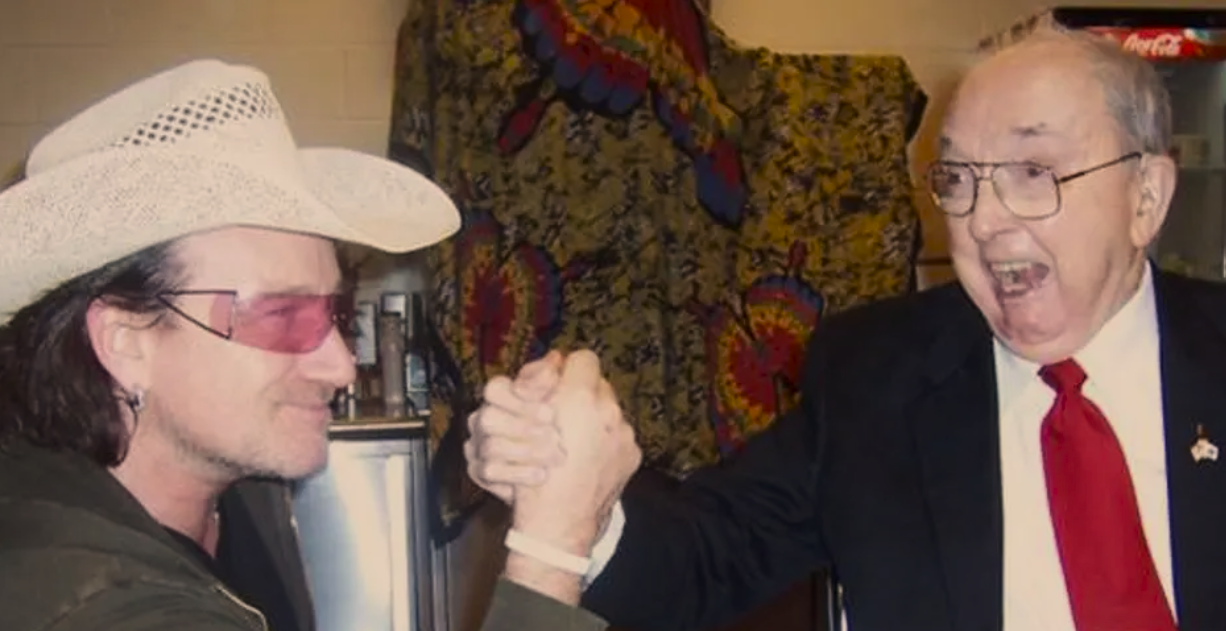
Allow me to frame this properly by stating the obvious; this would not be a stadium filled with tens of thousands of adoring fans, but rather awkward meetings with often jaded, highly suspicious politicians who felt no obligation or interest to write a blank check to support poor, often corrupt nations that added no economic payoff to their constituents, and certainly not at the urging of a starry-eyed Pop singer. In the US particularly, where the likes of Jesse Helms, the staunch, hard-core conversative controlling Congress’ purse strings, the prospects were not encouraging. Just imagine the setup, a Liberal “Rock Star” voluntarily stepping into a very public, conservative “lion’s den”, all in order to convince Helms, a white southerner to push through legislation to help poor Africans on the other side of the planet, based on nothing more than the strength of his the argument and personal charm.
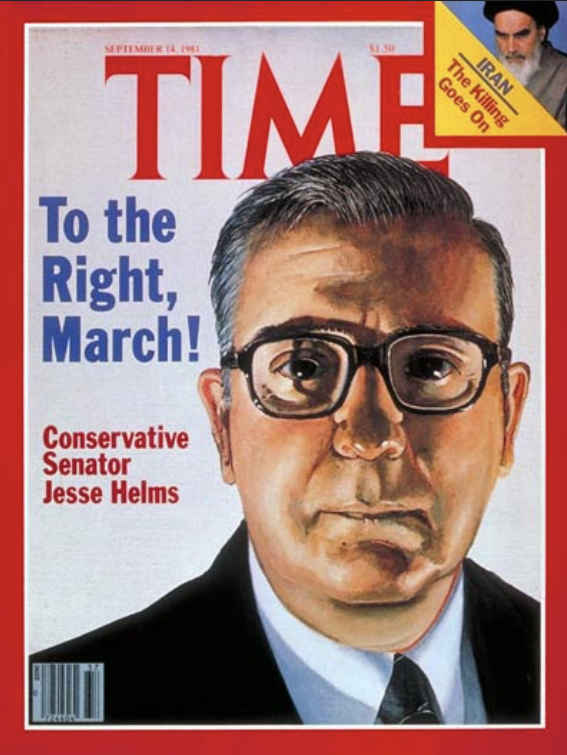
And he succeeded. He was able to secure nearly half a billion dollars from the US alone and he accomplished it by using a principle he learned indirectly from Martin Luther King. To explain what that means, I’ll need to circle back to Assayas’ book and allow Bono to describe how he came across King’s inspiring approach to cut through Racial/Religious/Political differences.
As Bono tells it, he found himself speaking with Harry Belafonte at some highfalutin fundraiser. Belafonte, in addition to being a popular black singer and actor in the 50s and 60s, was also an activist and trusted member within the civil rights movement and knew Dr. King personally. At this introduction, Bono apparently realized the unique opportunity it presented and intended to learn something inspiring about his idol (MLK) that wasn’t casually available to the general public.
At Bono’s urging, Belafonte told him that in 1961, something occurred that would drastically test the civil rights movement and threatened to derail all the progress that had been made up to that point. President Kennedy had just appointed his little brother “Bobby” as the Attorney General of the United States, a controversy in itself, but it also worried the Civil Rights leadership because it was rumored that the younger Kennedy did not support the civil rights movement.
Dr. King listened patiently while the others made point after point about how the young Kennedy stood in their way, that he represented a major threat to their progress. Dr. King, evidently frustrated at the pessimism, slammed his hand down on the table to silence everyone, and asked those at the meeting, “are you telling me that none of you can think of one good thing to say about this man?” To which they all said no, reiterating the young Kennedy would negate all the progress they had made. Then MLK closed the meeting saying that they would not meet again until they could find something positive about Bobby Kennedy.
Well, when they came back together a few weeks later, Dr. King was told they had learned that Kennedy was a very devout Catholic and was particularly close to his local Priest. King heard that and smiled, saying “That is where we will go. Our movement will pass through that relationship”, then finished with an amazing line, “Find the light in a man, and proceed from there.”
I read that and was stunned at its sheer eloquence, if not also its utility. Yet in the heat of the battle they were fighting, that could be interpreted as manipulative, but I would strongly disagree. The knowledge of Kennedy’s relationship with his Priest was not approached in order to manipulate, but rather to inspire a principled moral reckoning. And as it turned out, that was precisely how the Civil Rights movement gained the government’s backing, as Bobby Kennedy came to agree with the plight of African Americans and defended civil rights with all his constitutional authority.
From MLK’s example, Bono was able to find the same starting point with Helm’s and the other politicians he needed to convince. In Helm’s case, Bono knew that he was a devout Christian, like himself, so he engaged Helm’s on that level by convincing him that the AIDS plight in Africa was no different than the Leprosies found throughout the Bible; that ‘this’ moment called for a Biblical response, equating the needs of Africa’s poor to the same moral proposition.
His achievement is seldom mentioned now, but in real terms, Bono is directly responsible for saving thousands of lives. With that in mind, try to think of another Rock Star, any of them, who put more skin in the game to help make the world a better place.
I ask that rhetorically.
Now allow me to pivot a bit so I can describe a relevant moment from my life that occurred when I worked for Ford Credit. I happened to be traveling to Philadelphia for a project and on the flight seated next to me was a well-dressed, distinguished-looking older black gentleman who, I came to learn, was determined to fill the flight with conversation, which I typically did not encourage. But he was persistent, so we made the perfunctory small talk about the events of the day when I casually asked him where he grew up, to which he replied, Atlanta.
At that….. an intuition seized me, and after quickly doing some basic math, I understood that he would have been a young man living through the thick of the civil rights mayhem of the 60s and would have certainly experienced the indignities of the “Jim Crow” South. So, I decided to ask and see if he would tell me about it. He suddenly looked at me as if I had discovered the missing key to a room he hadn’t entered in decades (find the light!). Without saying a word he pulled out his briefcase, opened it and pulled out a book, and after a few seconds of scrolling, he stopped at a page and pointed to a picture of him in discussion with Martin Luther King. I was stunned, and quickly realized what I had stumbled into, and from there we talked non-stop all the way to Philadelphia. Then before departing the plane, I mentioned that I typically had Sundays free if he would like to grab some dinner, which he easily agreed. We exchanged numbers, and on my free day, I called and we met for two hours of dinner and conversation.
It was a such wonderful experience and one that played out because I instinctively proceeded from the same starting point that Bono had learned from MLK…. “find the light in a man and proceed from there.” By going with my gut intuition and asking him to respond to what could have been an uncomfortable question, given the nature of things, I was given the honor of several hours of conversation that would never have happened otherwise. He even took me to his office where the walls were covered with photos of him with various political leaders, even with President Jimmy Carter in the late 70s. Apparently, he was thirsting to have a chance to share with me, or anyone, where his life had once been…..but the pleasure was all mine!